

GST billing software for kirana & retail shops: 7 things 'GST-ready' must mean
CGST/SGST vs IGST, GSTN HSN codes, Rule 31D MRP valuation, credit notes, and GSTR-1 exports — a practical checklist for Indian kirana and retail owners.
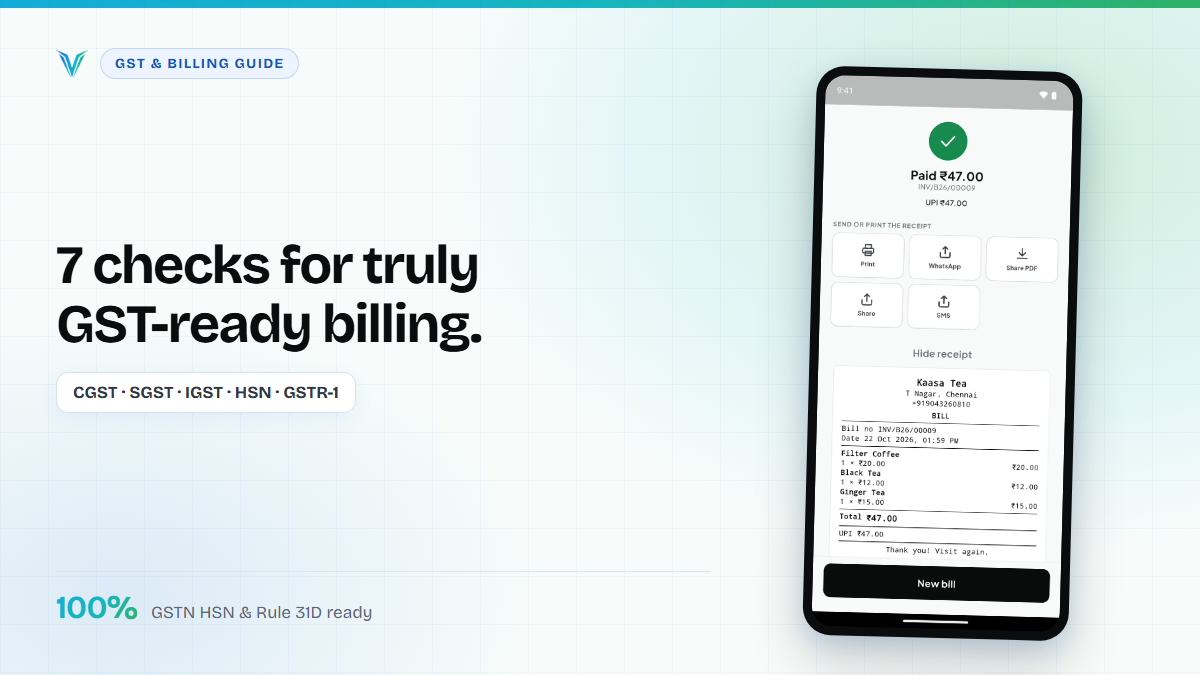
Almost every billing app in India claims to be "GST-ready". For a real kirana store or retail shop, true GST compliance means seven concrete capabilities — not just printing the letters GST at the top of a receipt.
1. Automatic CGST + SGST vs IGST split
Sales inside your state carry CGST + SGST; inter-state supplies carry IGST. Kaasa resolves place of supply automatically from your shop state and customer state so counter staff never guess tax types.
2. GSTN-aligned HSN codes & multi-slab items
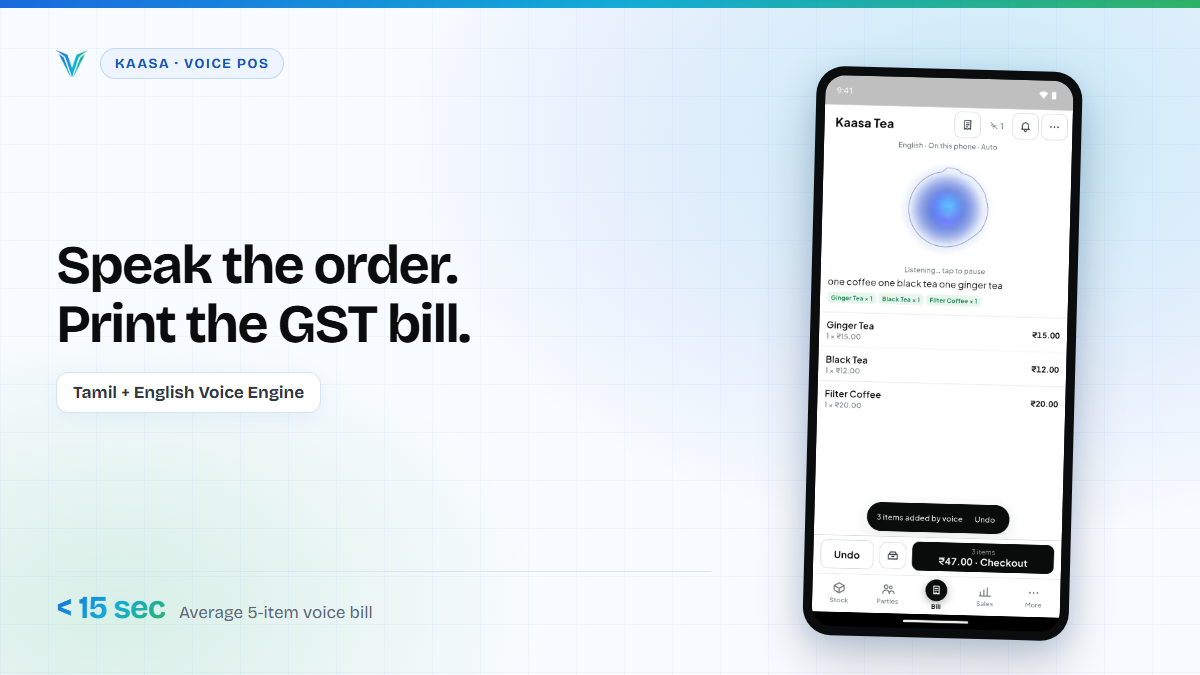
Rice, dal, biscuits, cosmetics, and soaps sit in different GST slabs. Kaasa stores the HSN code and tax rate on each item once so every voice or tap bill calculates tax automatically.
3. Rule 31D MRP valuation & non-GST mode
Categories like pan masala and tobacco require MRP-based valuation under Rule 31D. Meanwhile, shops below the GST registration threshold need clean Bills of Supply without confusing zero-tax lines. Kaasa handles both cleanly.
4. Proper credit notes & month-end GSTR-1 exports
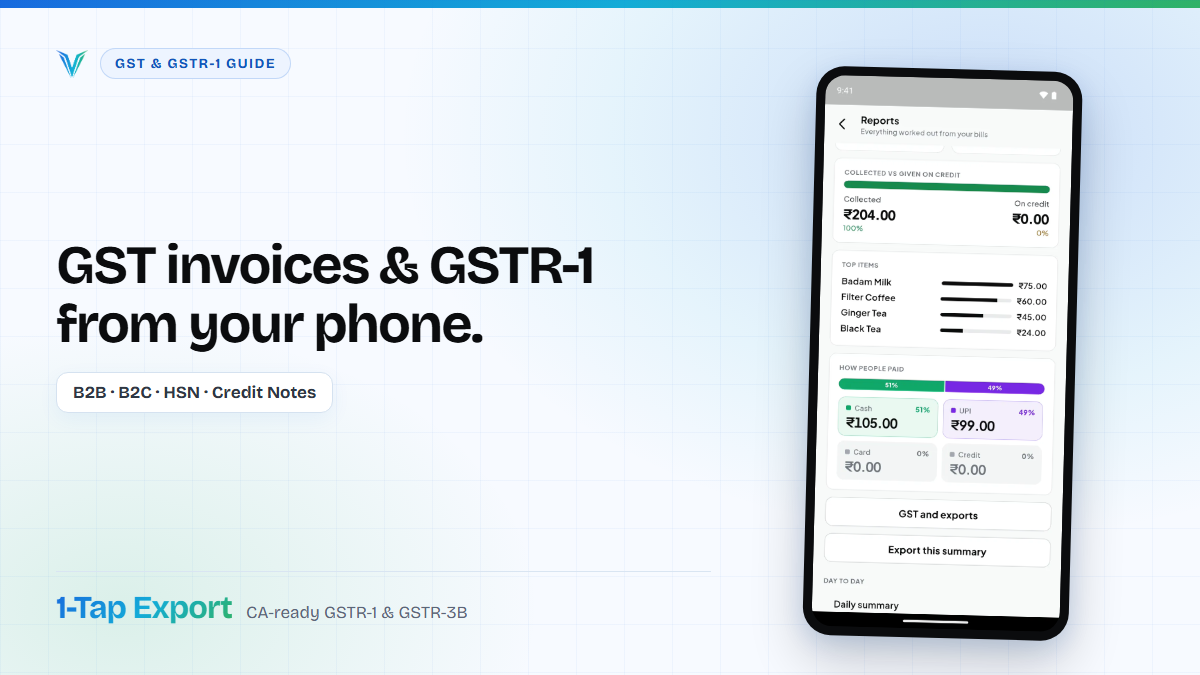
Customer returns must issue a credit note referencing the original invoice and tax rate rather than deleting a line. On Kaasa Business (₹12,999/year + GST), GSTR-1 and GSTR-3B summaries with HSN totals export cleanly for your CA or the GST portal.
5. Encrypted offline records backed up in India
GST records must be retained for years. Kaasa stores every bill first in an encrypted on-device database, backs up daily to servers in India, and lets you export your data to Excel or PDF anytime.